What shipped
- A location-based street ritual.
- Generated missions and city coordinates.
- Member-gated submissions.
- A public ritual pinboard.
- Downloadable cards and artifacts.
Live case study
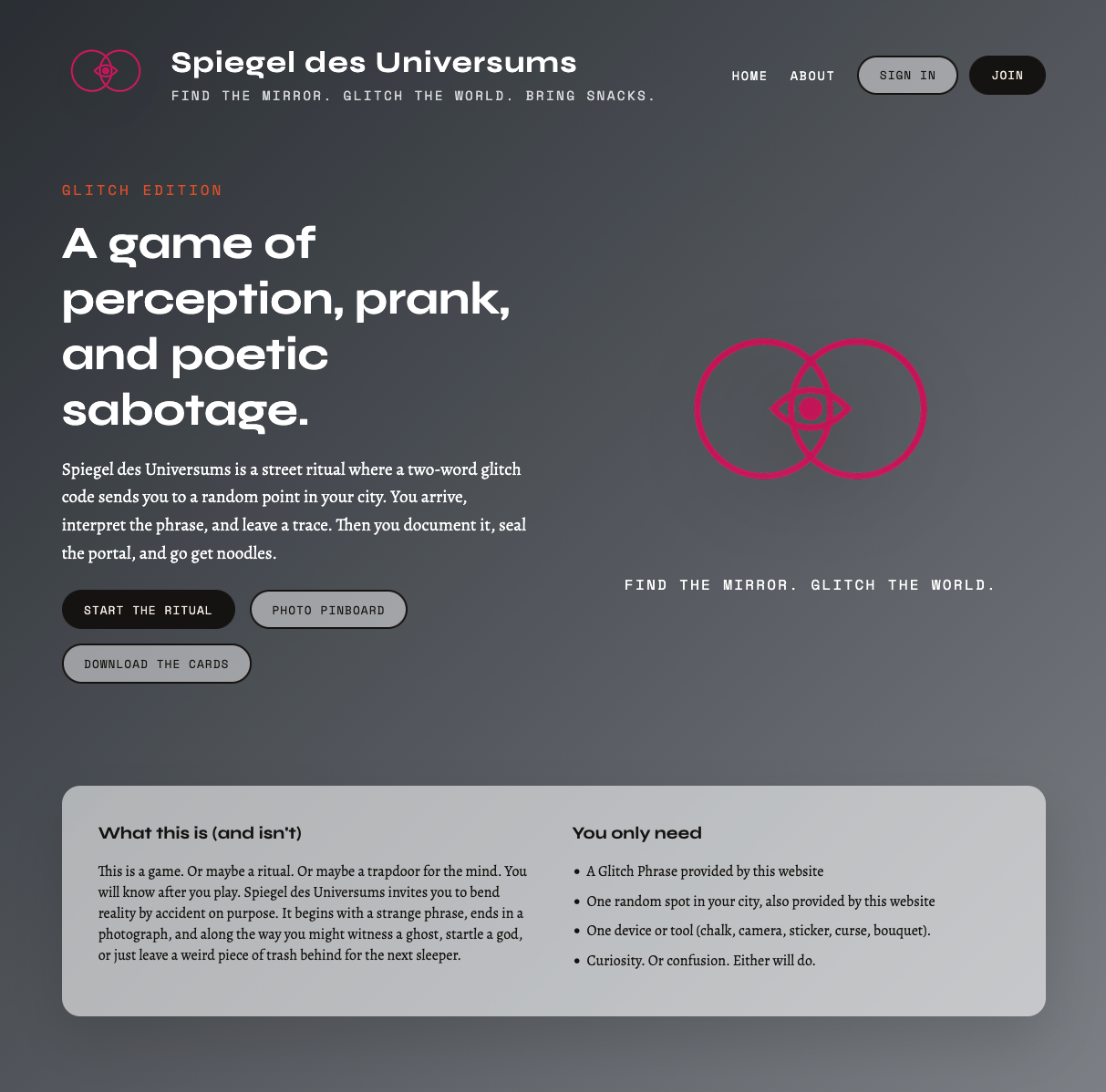
A finished street-ritual platform—and the first product I could build only because AI became a development partner.
The distinction
The live system uses Ghost, geolocation, and member flows; public submissions are handled by n8n workflows. No model generates or decides anything for visitors at runtime.
AI mattered in the development process. It helped turn an unusual, drifting concept into a bounded specification, coherent architecture, custom theme, working workflows, and a product I could ship.
Why it belongs on HITM
I had the concept, tone, visual direction, and product judgment. AI helped close the implementation gap: translating decisions into code, exposing architectural questions, and accelerating iteration without taking ownership of the product away from me.
The process worked when responsibility stayed explicit. I decided the boundaries, reviewed the output, tested the flows, and owned what shipped. That makes Spiegel a practical case for Human in the Middle: AI increased what one person could build while human judgment remained the governing layer.
A live test
The GPS wayfinding had worked on Android, so the iOS-specific problem surfaced late: while we were already playing Spiegel des Universums on an iPhone. I opened the Codex app on the phone, diagnosed and fixed the problem within a few minutes, and we continued playing.
This is a small but concrete example of the development model at its best: real cross-platform use exposed what earlier testing had missed; the human understood what was failing and what mattered next; and AI shortened the path from observation to a reviewed fix.
From idea to system
Separate settled creative decisions from open technical questions and define the smallest complete ritual.
Make Ghost, n8n, geolocation, authentication, submissions, and public evidence behave as one product.
Test tone, failure states, member flows, and operational maintenance before calling the project finished.
Live now
The product is finished and available to play. The case study documents how an AI-assisted process helped make it real without putting AI inside the experience.