AAA proves
Arthur can do the work
Concept, specification, interface, implementation, testing, daily use, release gates, and named responsibility.
Human in the Middle
Practical teaching, training, and AI-governance advice for organizations that want useful AI without giving away judgment or responsibility.

Human in the Middle is my AI framework. It defines how I think about AI-shaped work: what should be automated, what should stay human-owned, where review belongs, and how systems can preserve judgment, responsibility, and control instead of hiding them behind automation.
Human in the Middle is the framework. HITM Labs is the teaching practice. Arthur's AI Lab is the video layer: short tutorials, practical walkthroughs, and examples that let future clients see the teaching style before they book a workshop or course.
I teach what I practice. My tutorials and labs draw on current product work: real specifications, interfaces, implementation choices, failures, corrections, and release decisions.
Practice behind the teaching
Code:Emotion supplies the product thinking, interface craft, and systems judgment. Augmented Arthur: Applications is where that discipline meets AI-assisted implementation in native software Arthur uses, tests, and prepares to ship.
That work gives the teaching a live source: not just what a tool promises, but where it failed, what had to be reviewed, why a boundary mattered, and which decisions remained human-owned.
AAA proves
Concept, specification, interface, implementation, testing, daily use, release gates, and named responsibility.
The Labs prove
Clear explanations, structured exercises, facilitated decisions, and methods other people can apply.
The decision problem
A board asks for an AI plan. A vendor promises automation. A team has already started experimenting. The difficult question is rarely whether AI can produce something. It is whether the organization can inspect, govern, and stand behind what happens next.
Teaching is the front door
The teaching layer is deliberately tangible. It uses working examples, transparent experiments, and unfinished tools whose progress is shown honestly rather than disguised as finished software.
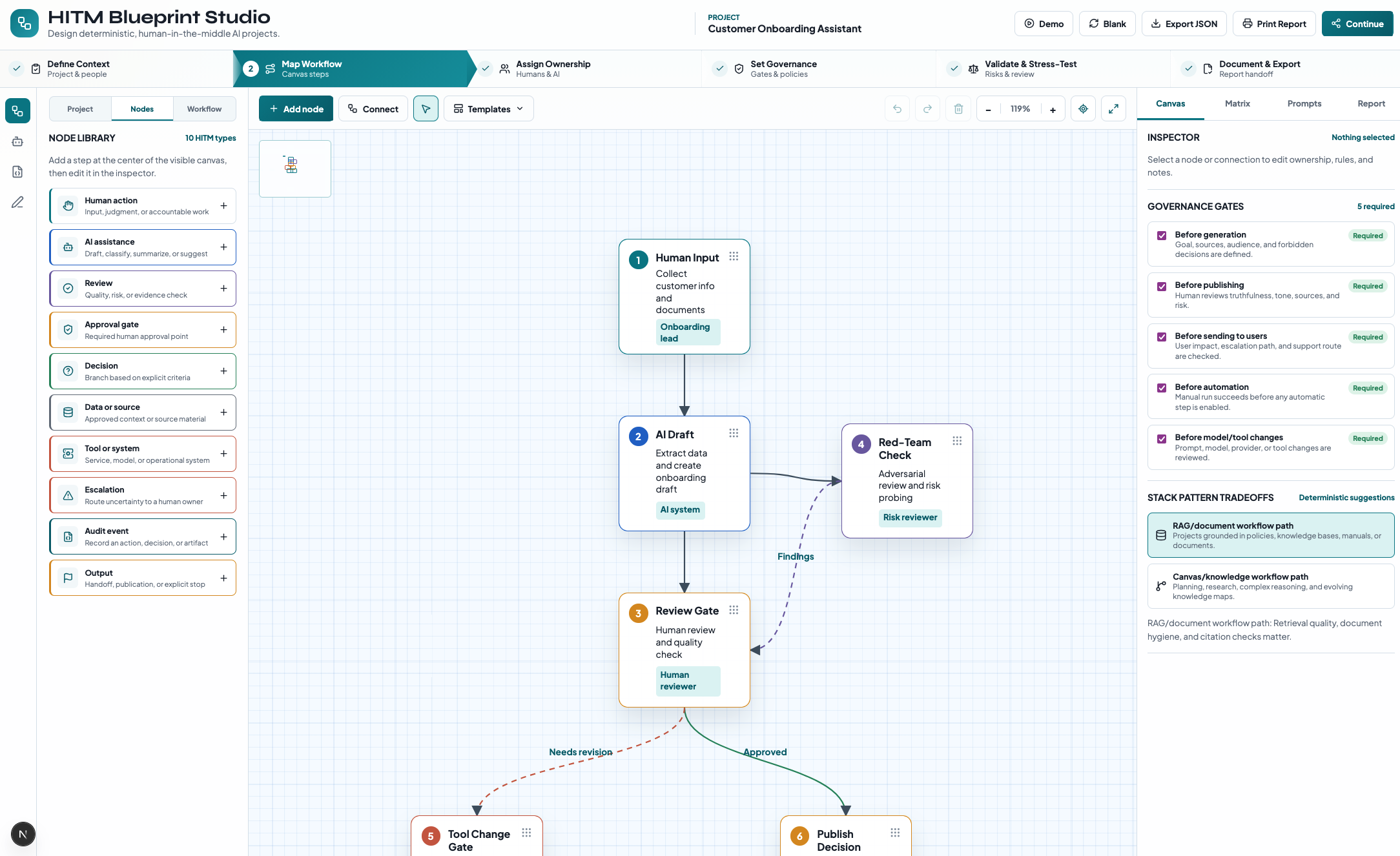
Work in progress
A guided environment for mapping ownership, approval gates, risks, and the boundary between human and machine work.
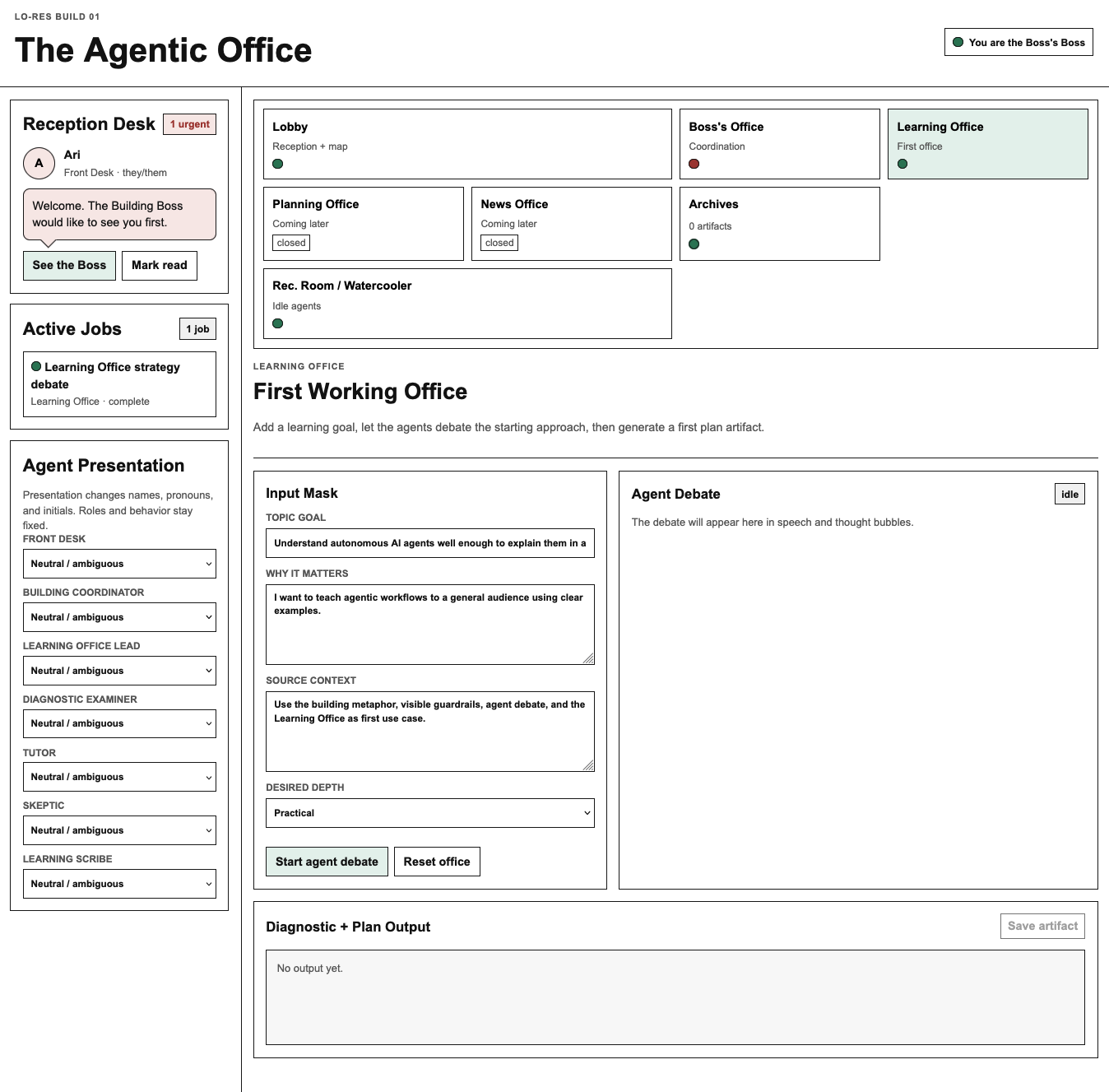
Work in progress
A playful teaching device that makes agentic workflows, delegation, and human checkpoints easier to understand.
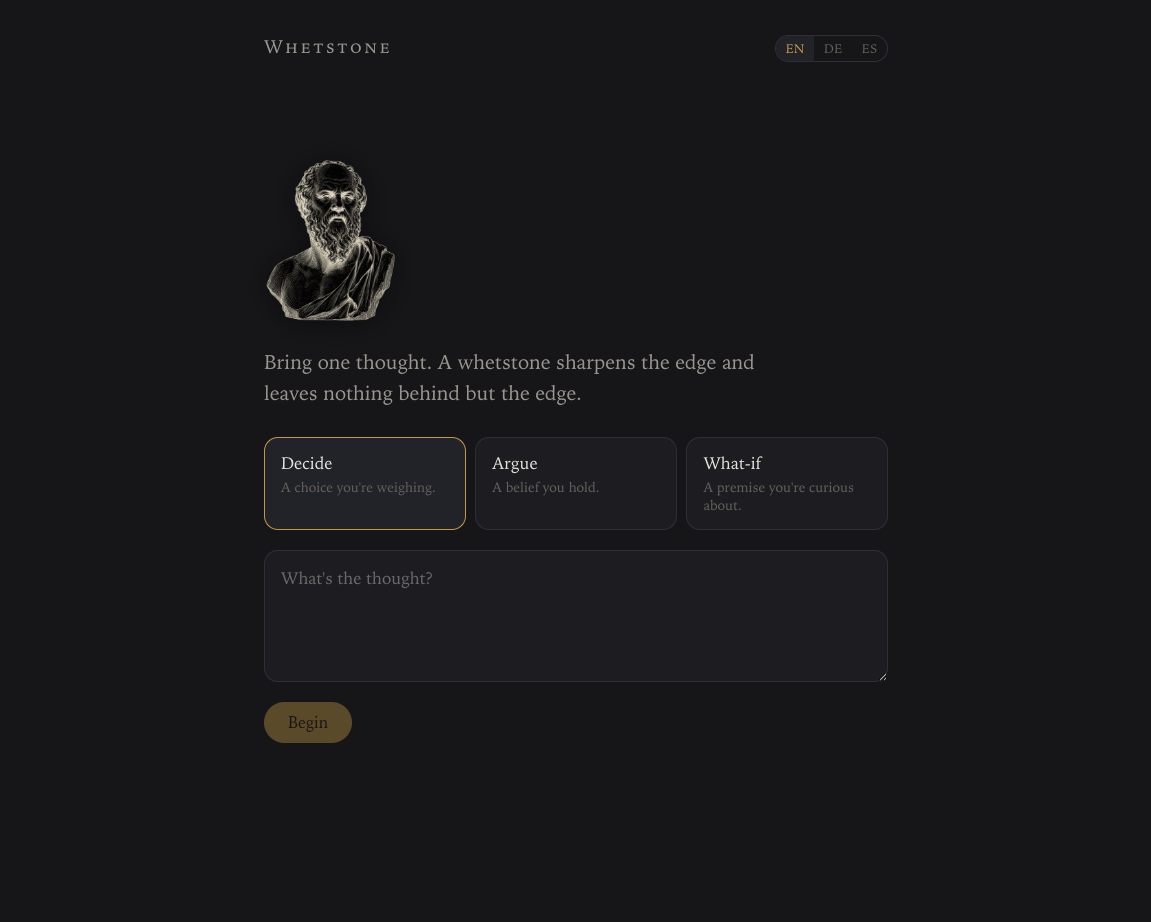
Work in progress
A public philosophy demo for testing claims, sharpening judgment, and resisting confident but weak AI output.
Ways to work together
Bring one real AI use case. We map what AI may do, what remains human-owned, and which review points matter—then leave with a clear go, modify, or do-not-automate direction.
Applied and Quest formats teach teams through real material, visible checkpoints, and reusable workflows rather than abstract lectures.
Clarify ownership, approval, escalation, documentation, and adoption before an AI-supported workflow becomes difficult to change.
HITM in action
Aerial View, card&board, and Spiegel des Universums show HITM as a development practice: finished, working products built with AI while product intent, design authority, review, and responsibility remain human-owned.
DONE, GLASSBOX, and Panic Defense show how HITM principles change an interface: consequential actions become visible, review happens at the right moment, and a human can understand what the system is asking them to own.
The evidence sits at different levels of maturity: Aerial View and card&board are shipped products in private, daily use, while Spiegel des Universums is live. DONE, GLASSBOX, and Panic Defense remain design case studies; working prototypes are their next step. None is presented as proof of validated operational outcomes.
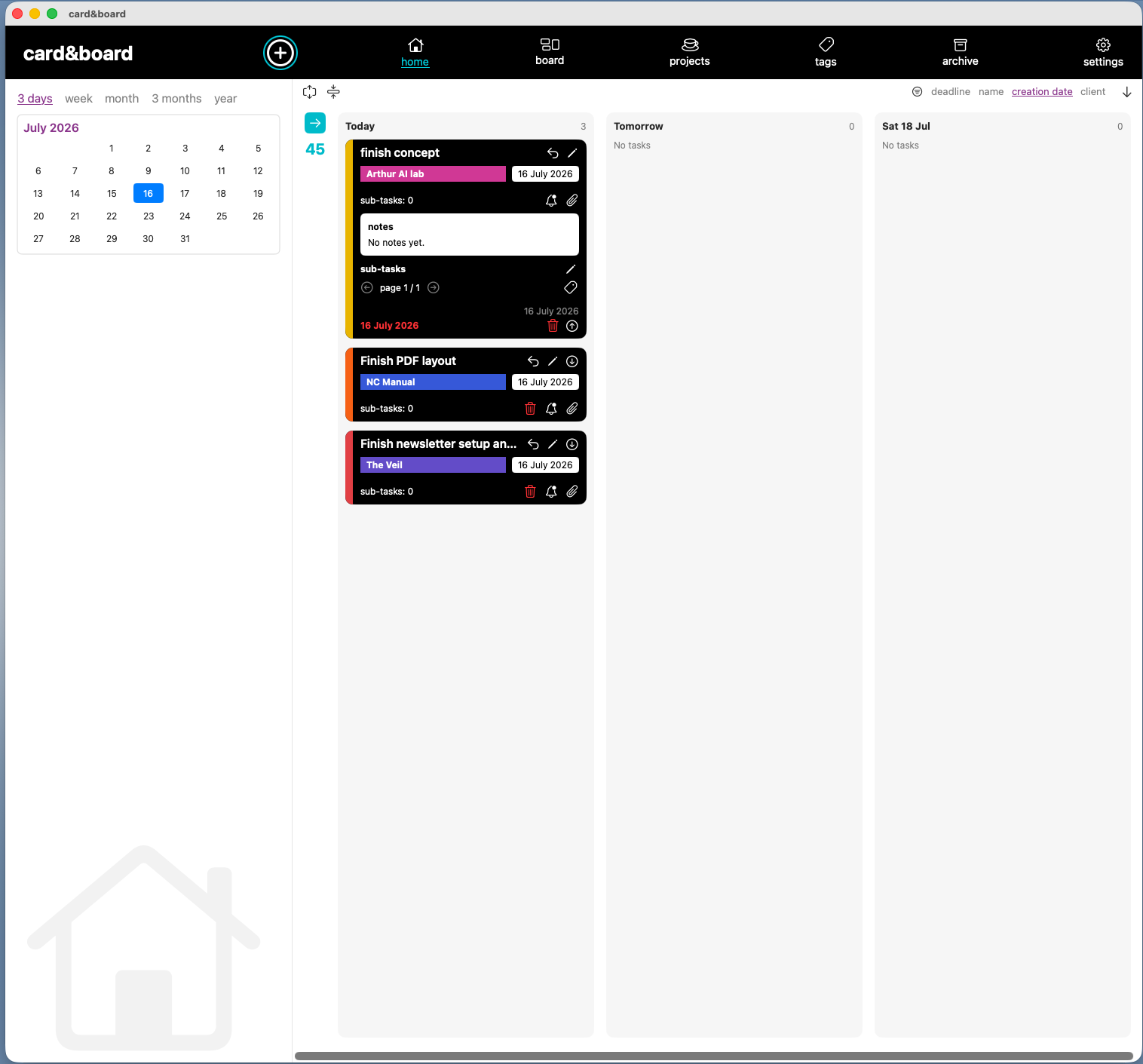
Working product · used daily
A native macOS app I conceived, specified, designed, tested, and now use every day—implemented in SwiftUI with Claude Code.
Read case study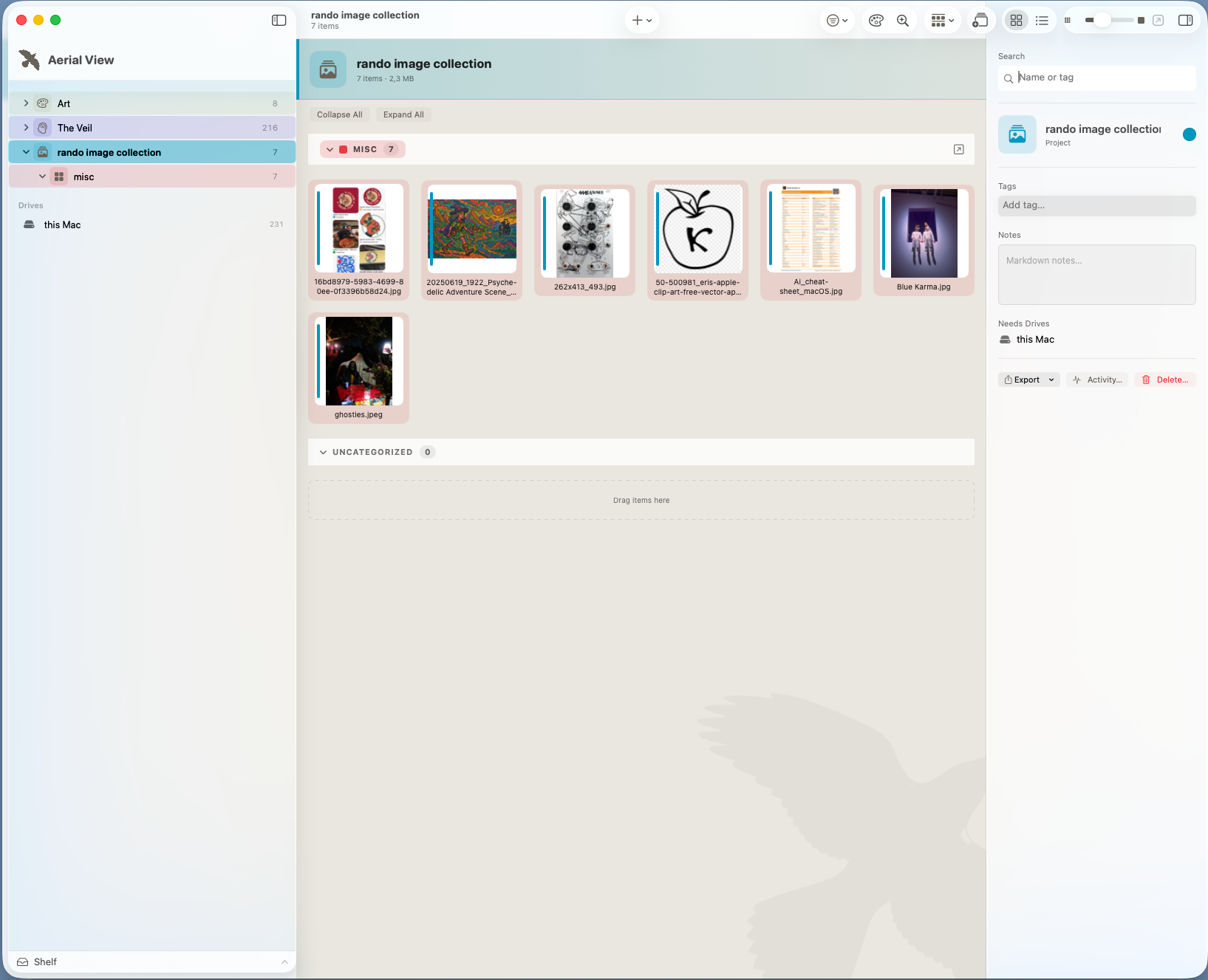
Working product · private daily use
A native file-curation app that organizes one file across many projects without moving or duplicating the original.
Read case study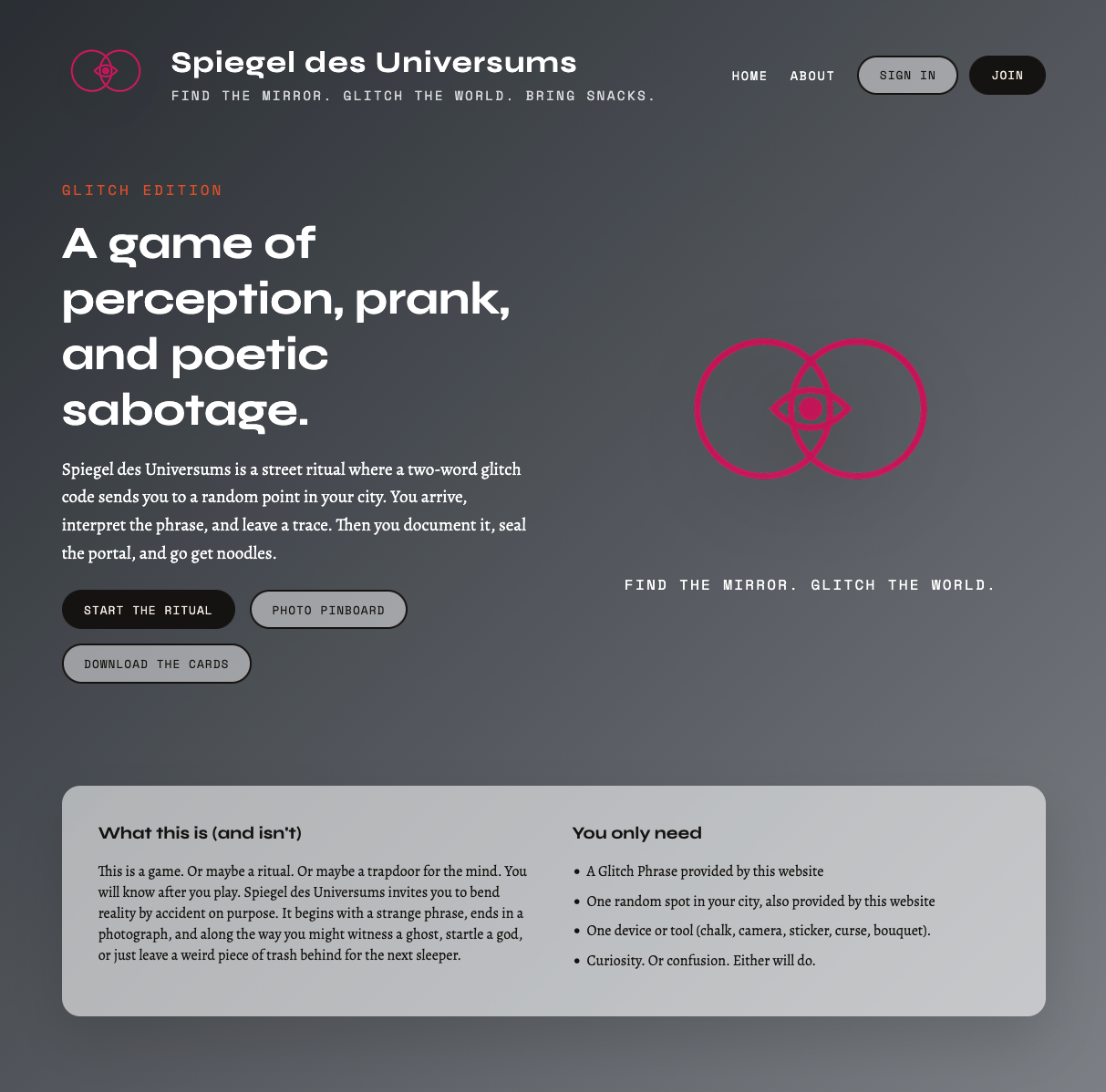
Finished & live
The first product I built entirely through an AI-assisted development process. AI is not in the runtime; it helped make the specification, architecture, theme, and workflows buildable.
Read case studyOpen live site ↗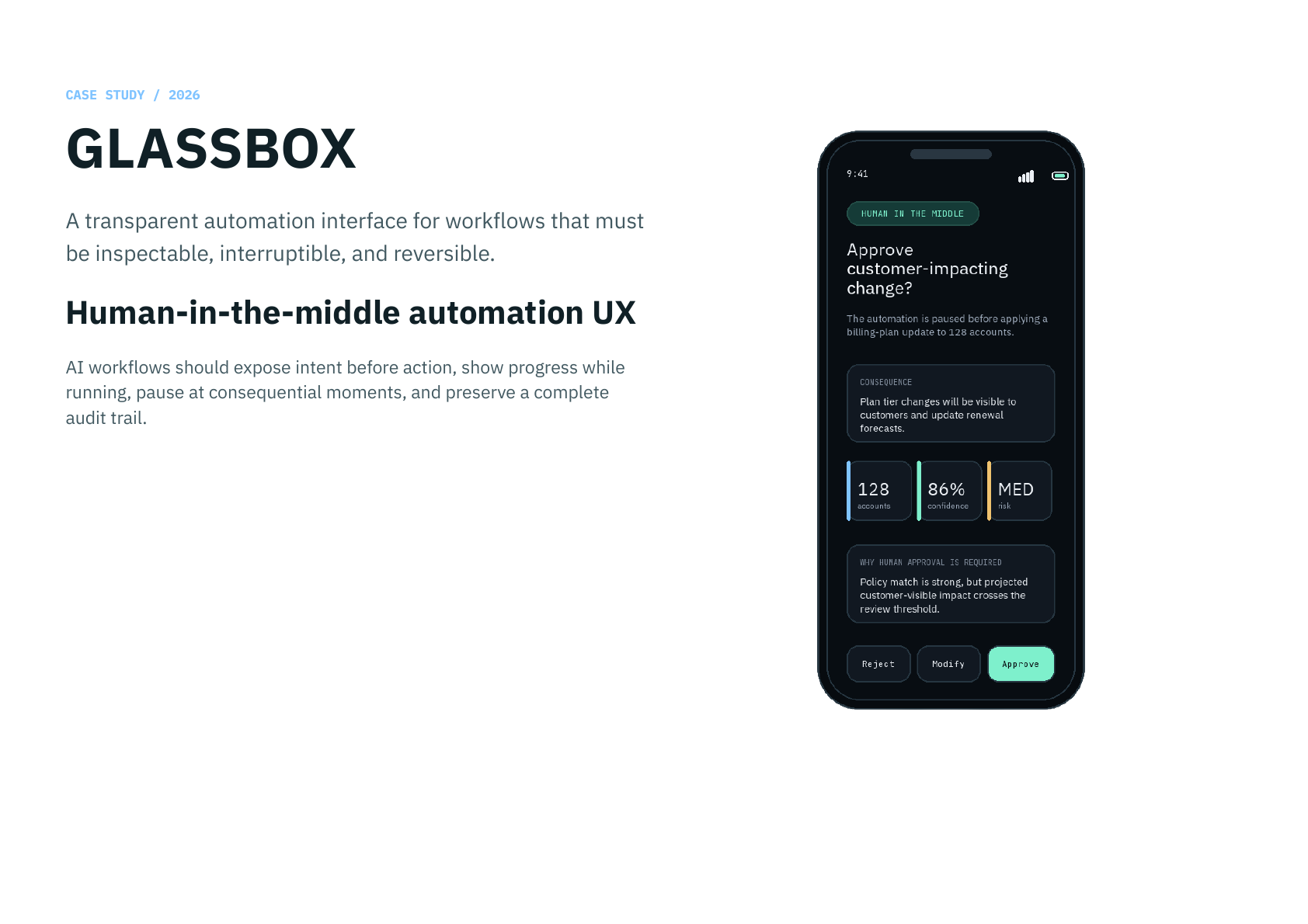
Case study
Visible intent, live execution, consequence gates, audit, and reversibility for automated work.
View project →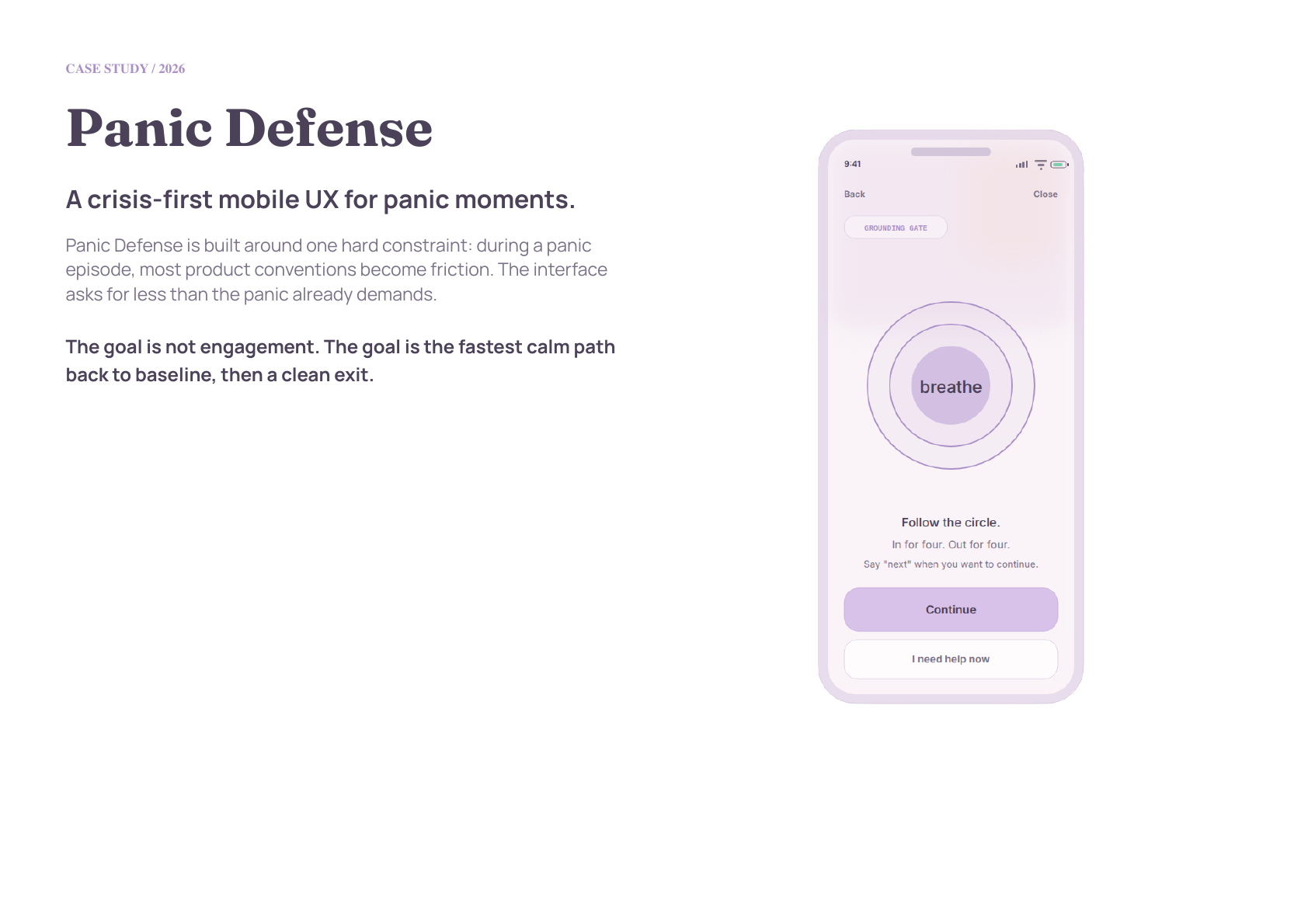
Case study
A low-cognition crisis flow where support, human choice, and a clean exit matter more than engagement.
View project →The unfair advantage
Most AI-governance offers stop at principles, policies, or technical architecture. Code:Emotion adds the missing interface layer: the actual screens, states, gates, and decision points through which people retain control.
The two practices remain distinct sibling brands under schmidtpabst.com. They cross-promote because strategy and design are stronger when the governance model can be made visible and usable.
Customer discovery
I am currently speaking with organizations about where AI decisions stall, what vendor claims are difficult to evaluate, and where responsibility becomes unclear. This is a discovery conversation, not a disguised software pitch.